Germain DROOGENBROODT – Poeme multilingve (3): Tanigucho Yosa Buson – “Haiku”
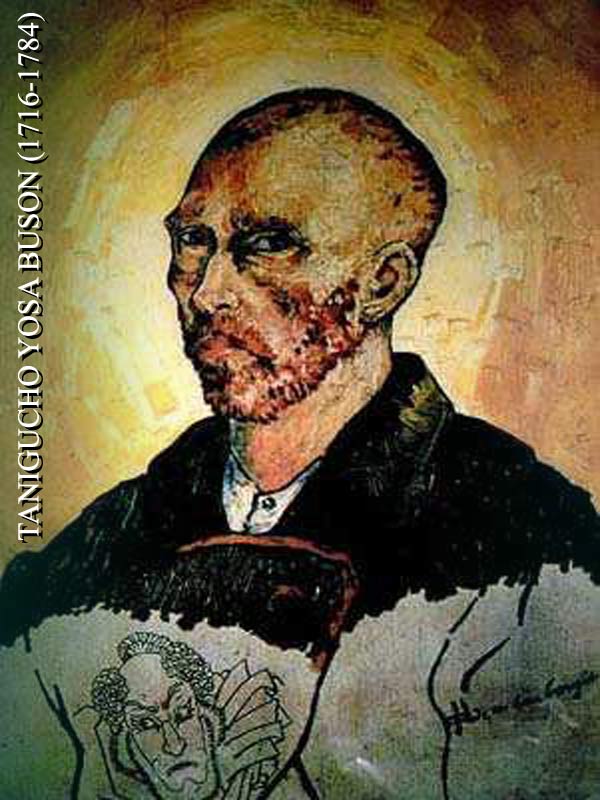
Yosa Buson sau Yosa nu Buson (与 謝 蕪 村, 1716 -1784), poet japonez şi pictor al perioadei Edo. Împreună cu Matsuo Bashō şi Issa Kobayashi, Buson este considerat printre cele mai mari poeţi ai acestei perioade. S-a născut în satul Kema din provincia Settsu (Osaka) . Numele lui de familie era iniţial Taniguchi. În jurul vârstei de 20 ani s-a mutat la Edo (Tokyo) şi a învăţat poezie sub tutela maestrului haikai Hayano Hajin. După ce Hajin a murit, Buson s-a mutat la provincia Shimōsa (Ibaraki). Tot în aceeaşi peroadă a călătorit prin sălbăticia din nordul insulei Honshū pe urmele idolului său, Matsuo Bashō, care a fost sursa lui de inspiraţie pentru celebrul său jurnal de călătorie „Oku nu Hosomichi” (Drumul îngust din interior). A publicat notele sale de călătorie în anul 1744, folosind pentru prima dată numele Buson. După ce a călătorit prin diferite părţi ale Japoniei, inclusiv Tango (partea de nord a Prefecturii Kyoto) şi Sanuki (Prefectura Kagawa, Shikoku). Mai târziu, la vârsta de 42 de ani, Buson s-a stabilit în oraşul Kyoto, unde se crede că a început să scrie sub numele de Yosa, nume pe care l-a luat după locul naşterii mamei sale (Yosa, în provincia Tango). S-a căsătorit la vârsta de 45 de ani şi a avut o fiică, Kuno. Din acel moment, el s-a stabilit definitv la Kyoto, unde a scris şi a predat poezie. În 1770, el şi-a asumat titulatura (pseudonimul) de „Haigō (俳 号, haiku) de Yahantei (夜半 亭)”, care a fost şi pseudonimul profesorului său Hayano Hajin. Buson a murit la vârsta de 68 și a fost îngropat la Konpuku-ji din Kyoto. (https://en.wikipedia.org/wiki/Yosa_Buson, traducere George Roca)
–––––––––––––––––––-
TANIGUCHO YOSA BUSON (与謝蕪村) – HAIKU
Traducere în limba olandeză de
Germain Droogenbroodt
***
Moeizaam beklom ik
de steile heuvel en zie
een braamstruik in bloei
***
De zuiverwitte
pruimenbloesems kleuren zich
traag met morgenrood
***
Na de avondval
rooft de berg van de esdoorn
het fel vermiljoen
***
Je gaat nu heen, ach
en de wilgen zijn zo groen
de weg is zo lang
=====================================
TANIGUCHO YOSA BUSON – HAIKU
Traducere în limba română de
Gabriela Căluţiu Sonnenberg
***
Din greu drumul mi-l croiesc
în sus pe dealul abrupt când zăresc
o tufă de mur în floare
***
Încet albur pur al florilor
de prun prinde a se colora-n nuanţele
paletei vii a zorilor zilei
***
Târziu după ce se-nnoptează
muntele îi răpeşte arborelui de arţar
ţipătorul ton de vernil aspru
***
Te duci acum, vai mie
în timp ce pajiştile sunt aşa verzi
iar drumul atât de lung.
==============================
TANIGUCHO YOSA BUSON – HAIKU (俳句)
Traducere în limba chineză de
Lan Qian – Hai An ( [日本] 與謝蕪村 漢譯 蘭芊 海岸)
***
我費力攀援
陡峭的峻嶺,見
荊棘花正開
***
好純潔的白
梅花獨自兒描畫
晨曦的嫣紅
***
夜幕垂落後
山中的楓葉失去
醒目的朱紅
***
此刻你啟身
柳葉兒青翠欲滴
旅程多漫漫
===========================
TANIGUCHO YOSA BUSON – HAIKU
Traducere în limba engleză de
Germain Droogenbroodt
***
Painfully I climbed
the steepish mountain and see:
a bramble in bloom
***
The virgin white of
plum blossoms paints itself
with the morning red
***
After nightfall robs
the maple from the mountain
the bright vermilion
***
You’re now going, ah
and the willows are so green
the road is so long
============================
TANIGUCHO YOSA BUSON – HAIKU
Traducere în limba spaniolă de
Germain Droogenbroodt şi Rafael Carcelén
***
Exhausto ascendí
la colina empinada
una zarza en flor
***
Lentas se pintan
las flores del ciruelo
con el color del alba
***
Cuando anochece
el monte arrebata al arce
su vivo granate
***
Partes hoy, ay
tan verdes los sauces
tan largo el camino
––––––––––
A prezentat:
Germain DROOGENBROODT
Doctor in literatură
8 iunie 2015
Spania
–––––––––––––
Yosa Buson or Yosa no Buson (与謝 蕪村?, 1716 – January 17, 1784 was a Japanese poet and painter of the Edo period. Along with Matsuo Bashō and Kobayashi Issa, Buson is considered among the greatest poets of the Edo Period. Buson was born in the village of Kema in Settsu Province (now Kema-chō, Miyakojima Ward in Osaka) city. His original family name was Taniguchi. Around the age of 20, Buson moved to Edo (now Tokyo) and learned poetry under the tutelage of the haikai master Hayano Hajin. After Hajin died, Buson moved to Shimōsa Province (modern-day Ibaraki Prefecture). Following in the footsteps of his idol, Matsuo Bashō, Buson traveled through the wilds of northern Honshū that had been the inspiration for Bashō’s famous travel diary, Oku no Hosomichi (The Narrow Road to the Interior). He published his notes from the trip in 1744, marking the first time he published under the name Buson. After traveling through various parts of Japan, including Tango (the northern part of modern Kyoto Prefecture) and Sanuki (Kagawa Prefecture in Shikoku), Buson settled down in the city of Kyoto at the age of 42. It is around this time that he began to write under the name of Yosa, which he took from his mother’s birthplace (Yosa in the province of Tango). Buson married at the age of 45 and had one daughter, Kuno. From this point on, he remained in Kyoto, writing and teaching poetry at the Sumiya. In 1770, he assumed the haigō (俳号, haiku pen name) of Yahantei (夜半亭, Midnight Studio), which had been the pen name of his teacher Hajin. Buson died at the age of 68 and was buried at Konpuku-ji in Kyoto. (https://en.wikipedia.org/wiki/Yosa_Buson)
Partajează acest conținut:


Publică comentariul